

Ecuador, Galapagos Archipelago
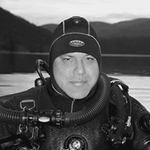
The name Galapagos holds a very special meaning for divers; one thinks of Charles Darwin, turtles, sharks, whale sharks, and diving lizards, but the country of Ecuador and the Galapagos Islands have much more to offer.

The first thought... Galapagos... turtles.

Yes, the equator runs through Ecuador.
The capital, Quito, is usually the first stop. At around 2900 meters above sea level, this Andean city is the highest capital in the world. There you can find everything you might need or want to get before continuing your journey.

Quito is a colorful mix of Spanish colonial architecture and modern buildings. The differences in elevation and houses built into the hillsides are particularly striking.
Overall, however, Ecuador is more famous for its breathtaking landscapes.

Ascent to the approximately 4000 meter high Cotopaxi Volcano.

picturesque mountain lakes.

A hummingbird visiting.
The onward journey from Quito is usually by plane to Guayaquil, Ecuador's coastal city, and then by plane to Baltra Island.

Galapagos consists of 13 larger islands with a total area of approximately 10 square kilometers, and hundreds of smaller islets. Only 5 islands are inhabited. The best diving experience is had on a diving safari (liveaboard). Since only a few of these "floating diving hotels" are permitted, a Galapagos safari is an expensive undertaking; including flights, travel, and a 7-10 day safari, you can expect to spend a high 4-figure sum – so it's more of a "once in a lifetime trip".

The Tiburon Explorer is a rather luxurious safari boat, making routes to the remote islands of Darwin and Wolf manageable even in rough seas.
Diving in Galapagos is extremely varied; the island group lies at the center of various ocean currents. Water temperatures can range between 14 and 26 degrees Celsius, and visibility between 5 and 30 meters. In many dives, such as off Darwin and Wolf or near Seymour Island, currents are normal. For example, we dived in drysuits with thin undergarments.

For such a diving safari to be enjoyable, one should be sea-resistant, have at least 100 dives, and deep and Nitrox certifications are advisable. Furthermore, experience with drift and boat dives is recommended.

diving with hammerheads and sea lions.

Drift dive off Wolf Island – gloves are not prohibited.


Schools of fish are not uncommon, but generally, abundant life is found in nutrient-rich ocean currents, which often means less visibility.

Technical or mixed gas diving is unfortunately not easily possible. Nitrox often costs extra and is only available up to Ean32. The Tiburon Explorer, for example, has a membrane system on board. We were able to do 4 dives a day, but unfortunately, dive time was limited to 50 minutes.
But perhaps rebreather dives will be possible in the future; things are currently changing.

Encounter with a sunfish (Mola Mola) at almost 40 meters depth - bottom time and breathing gas become scarce with a single 12L tank.


They live on land but go into the water to graze on plants.

The silhouette of the marine iguana when swimming looks somewhat like a small Godzilla.
Shore excursions are part of every diving safari to see the land-dwelling iguanas or frigatebirds.


and another film set to see, the "Pinnacle":

Conclusion: Sensational landscapes, challenging dives - an experience you typically only have once in a lifetime.
If you want to see more of Galapagos, order our underwater documentary on DVD or BluRay: Galapagos-Las Islas encantadas
Here is an excerpt:
If you are interested in a trip to Ecuador / Galapagos, please feel free to contact us. We have first-hand experience.