Rebreather Diving Courses
What is a rebreather?
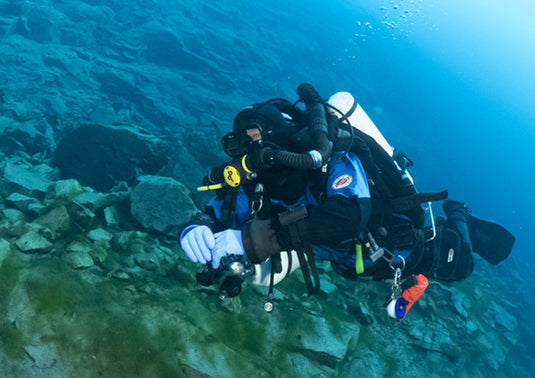
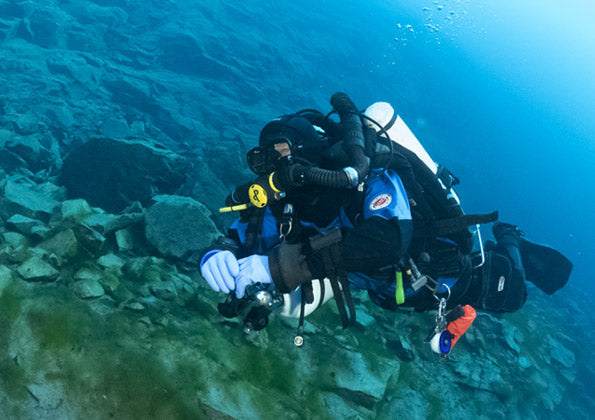
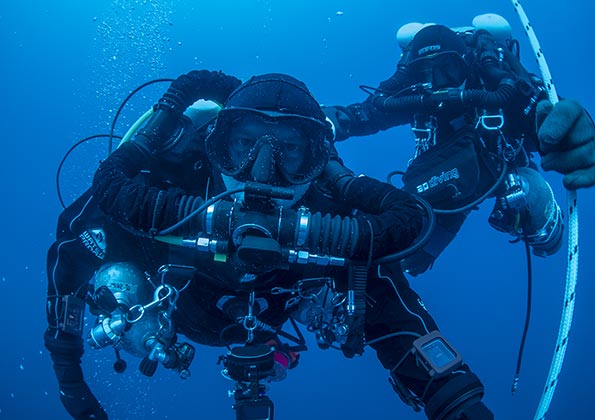
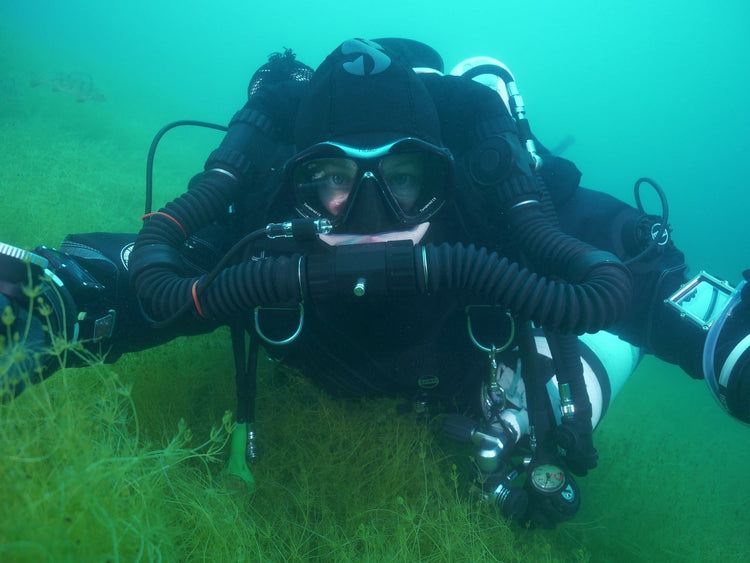
A rebreather, or closed-circuit breathing apparatus, is a closed or semi-closed system. We train on closed, electronically controlled units (ECCR) that have the following characteristics:
- Closed system
- Electronic control
- Automatic oxygen addition for constant O2 partial pressure
- Automated calibration of oxygen sensors
There are also semi-closed systems, but these are primarily used for extended recreational diving, or closed manual systems, which require a high level of attention from the diver and are usually not suitable or designed for deep dives.
Is rebreather diving dangerous?
In contrast to classic, open-circuit diving equipment, such as single or twin tanks, a rebreather requires a certain understanding of the effects of O2 on the human body, some dive physics, and technical understanding. Proficient and good training on the respective unit is necessary, and you can get that at Tauchsport Pape.
Training for Tec divers, Trimix, Rebreather, and Cave divers follows IANTD standards. IANTD is a technical diving association that has set standards in explorations and initial dives since its founding. Many IANTD instructors have set benchmarks as pioneers in their field (cave diving, wreck, trimix) and are still leading many innovations in technical diving today.
What are the advantages of rebreather diving?
- Less gas consumption
- No bubbles, less noise underwater
- Longer no-decompression limits
- Longer dive times
- Longer independent diving (it's no problem to go diving for a week with a CCR setup without filling tanks)
- More efficient and shorter decompression
- Extremely reduced costs for Trimix dives
- Pre-warmed breathing gas (less heat loss)
- Lower accident rate in technical dives due to better equipment control and better training
Generally, at a certain level in technical diving, there's no getting around a rebreather. The possible long bottom times, the savings on expensive gases like oxygen or helium. At the latest with Normoxic Trimix (in the 60-meter range), every single "open" dive becomes so expensive that the investment in a rebreather is definitely worthwhile, both financially and in terms of enjoyment. Most serious explorations or diving expeditions today are carried out by rebreather divers.
What are the disadvantages of rebreather diving?
- High initial purchase costs
- More complicated setup of the diving equipment compared to OC
- More maintenance required
- For dive trips, the destination base must be "rebreather friendly"
Starting rebreather diving (CCR) is not an easy decision; the investment for equipment and the user course can easily reach €10,000. However, you can also acquire suitable used equipment. We can advise you.
It makes sense to first choose two or three units and test dive them with an instructor of your choice before investing and starting the course. Your CCR instructor should also dive regularly on the equipment types they train on; only then can you be sure to receive sound and good training. Especially with closed-circuit rebreathers, good training is important because they not only offer advantages but also entail risks and dangers if handled improperly. We can help you find instructors for equipment we don't train on.
Today there are many good and reliable rebreathers on the market, often it is a matter of belief which unit is best for you. Every diver and instructor will try to convince you (partly for economic reasons) of their rebreather. Take your time, talk to CCR divers, and don't let yourself be sold a rebreather and course at the first contact. A good salesperson is not always a good instructor. A test dive with the unit of your choice is money well spent; the "try dive" should also include a theoretical introduction to the unit. It is also important to define your goals, what do I need the rebreather for: deep, cave, photography, health, etc., then you will find out which unit is right for you.
We can train you on three rebreather types:
1.The JJ-CCR - this rebreather is expedition-proven. The unit is quite simple in construction and easy to maintain. I have completed most of my deep and long Trimix and cave dives on this unit. The manufacturer is based in Denmark and has good distribution in Germany. Spare parts can be easily obtained.


2. The AP-Inspiration EVO - since 1999 (classic), this unit has been one of the first closed, electronically controlled rebreathers (eCCR) developed for recreational divers. Redundant systems, menu navigation, and clear alarms and warnings make this unit a good choice especially for CCR beginners. Since this unit has been on the market for a long time, many good used units are also available.

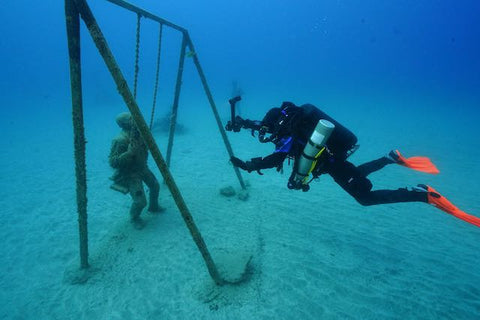

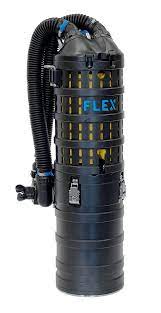
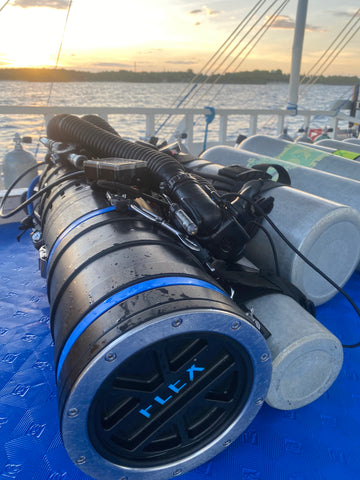
3. The Flex2 Sidemount Rebreather is aimed more at already trained CCR divers or trained sidemount divers. However, you can start from scratch, although training usually takes a little longer then. With its compact and technically rather stripped-down configuration, it is the ideal unit for travel or cave diving. Nevertheless, the Flex2, in all its configuration options, is a full-fledged rebreather, with ADV, large counterlungs, and redundant electronics, making it suitable for deep dives. The radial scrubber allows you to utilize your soda lime very efficiently.

Requirements:
For all Tec diving courses, in addition to the appropriate equipment, you will need the following documents:
Diving medical certificate (no older than 1 year), insurance (DAN, Aquamed, etc.)