


Prerequisite: Diving fitness, insurance, equipment
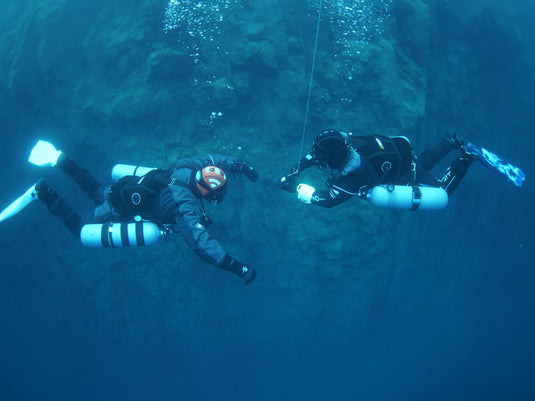
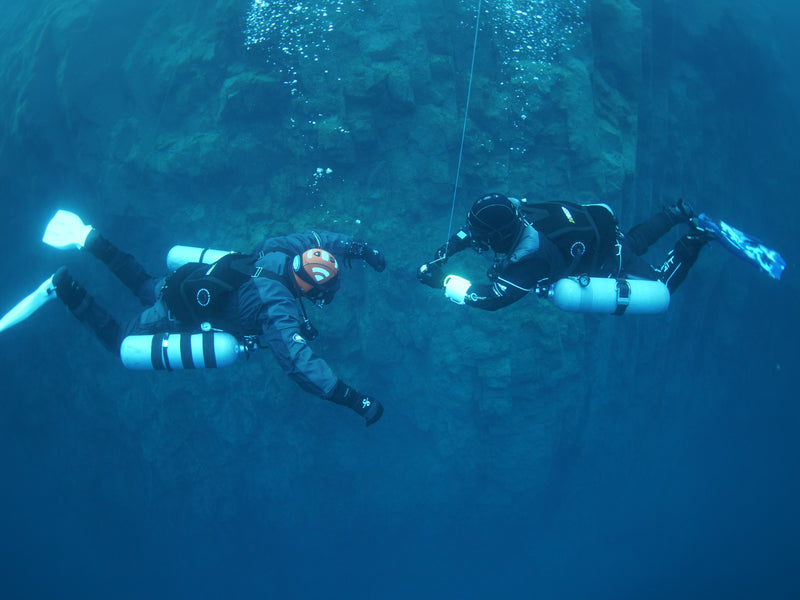
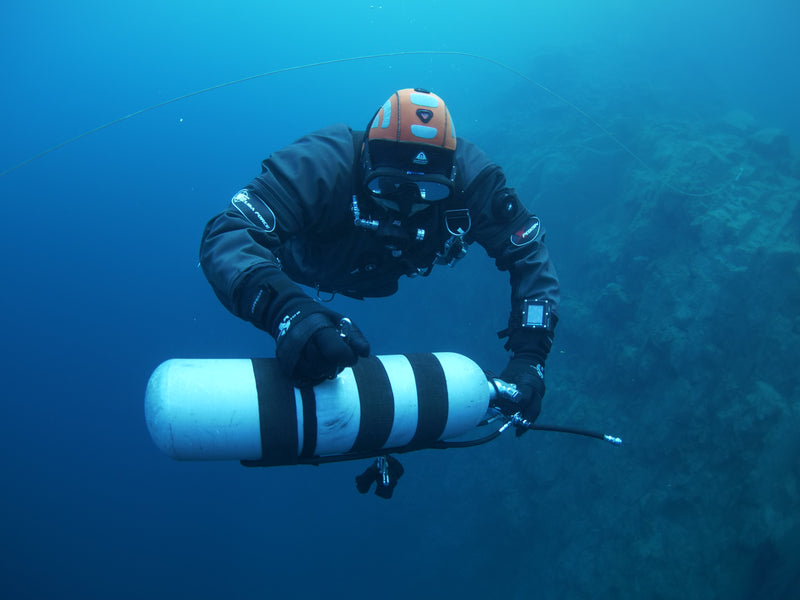
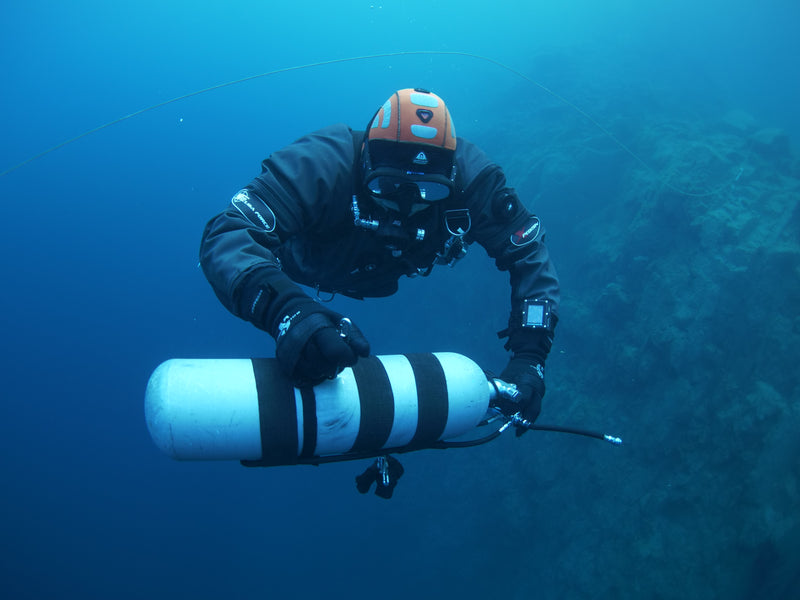
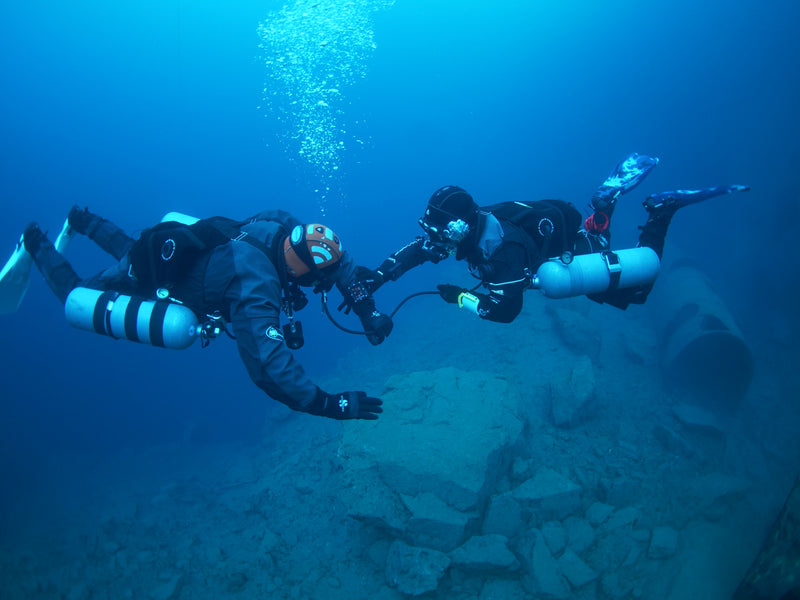
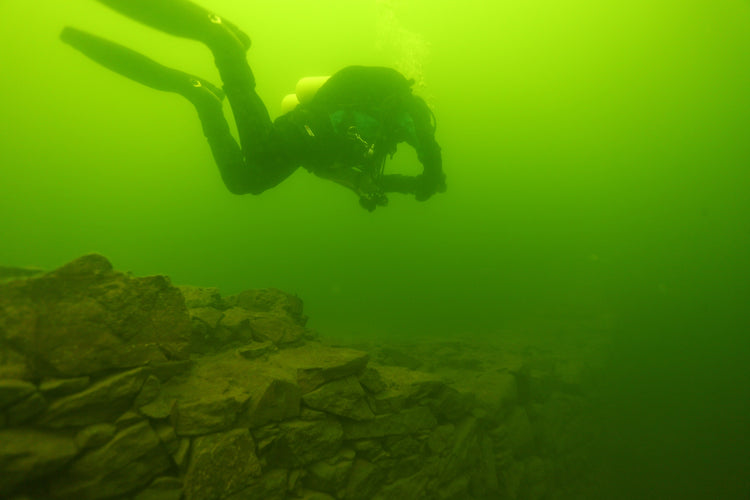
Sidemount diving gives you the freedom underwater to "have your back free." The positioning of the tanks on the sides allows you to don heavy diving gear only in the water and to flexibly navigate tight spaces, for example, when cave diving.
In the OW Sidemount Diver course, you will learn over 3-4 days to set up, adjust, and use a sidemount configuration with 1 and 2 tanks. Depending on your level of training, you will also learn to work with additional stages, dive planning, logistics, and special procedures for sidemount diving in various environments. These skills require training and experience, and since we have many years of experience in sidemount diving (OC and CCR), you can benefit from this.
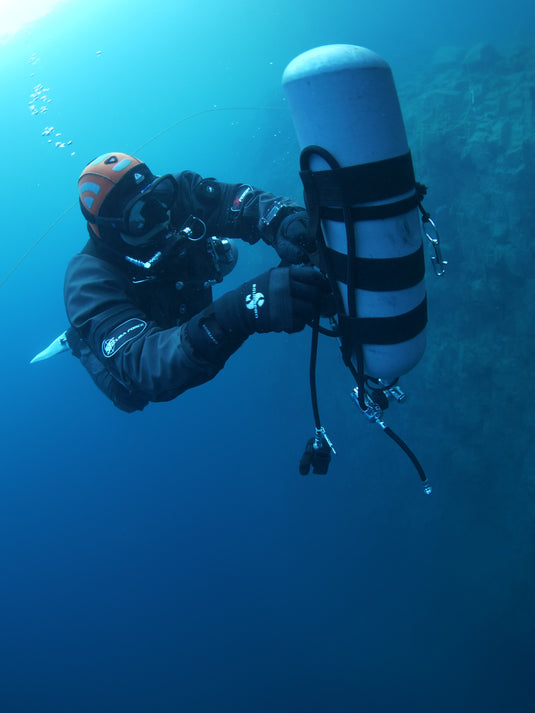
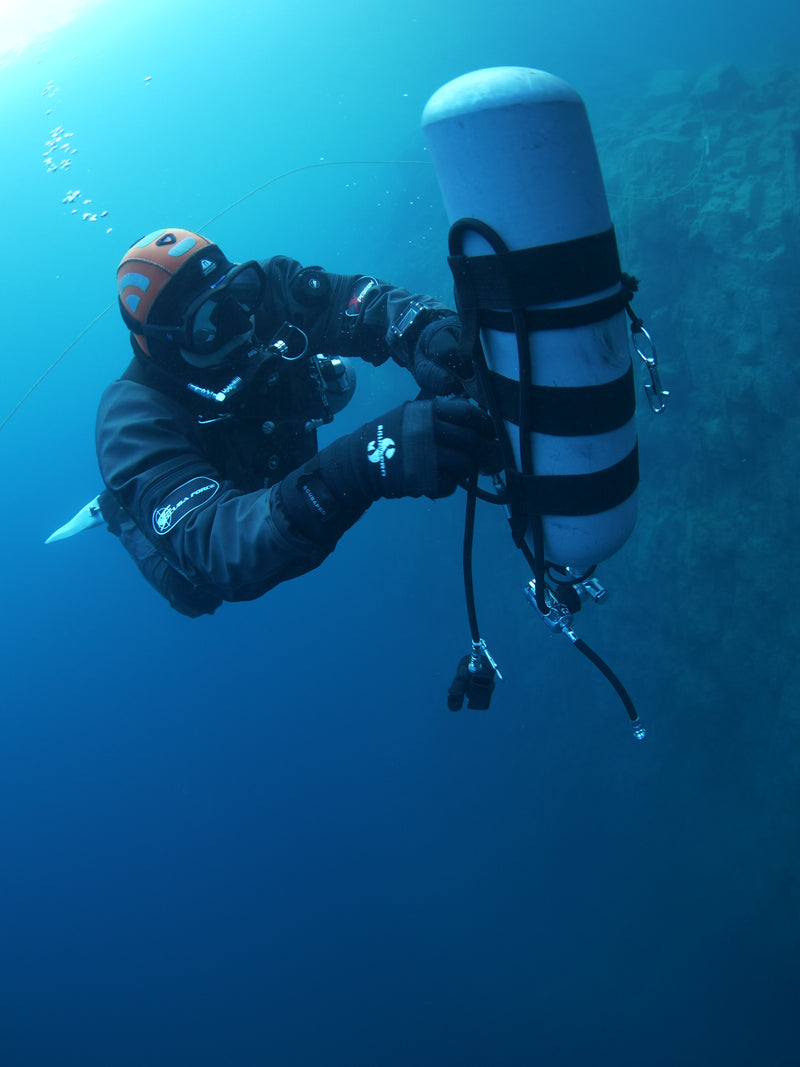
In the Tec Sidemount Diver (OC) course, you will additionally learn how to handle stage tanks for your bottom, travel, or decompression gases. This course then lasts 5 days.
An important part of the course is the adaptation of suitable sidemount equipment, therefore the course is not possible with a rental BCD. We are happy to advise you on finding suitable equipment and also have some items available for you to try. We prefer to work with sidemount systems from XDeep, Toddy Style, and Tecline, which you can also test in our shop.
You can also take the course in conjunction with the Essentials Diver and the Advanced Nitrox Diver.
Additional costs: teaching materials, certification €89, gases, entrance fees, possibly rental equipment
Simply include your preferred dates with your order.
IANTD Philosophy
The International Association of Nitrox and Technical Divers has been a pioneer in technical diver training for over 30 years. As the first international diving association, IANTD brought diving with Nitrox and suitable Trimix into recreational diving to reduce nitrogen narcosis. At IANTD, divers on open systems, as well as CCR (Rebreather) divers, find excellent training programs and instructors.
Many Tec diving courses include phases of instruction and phases of personal training.
We'll go diving first, and then we'll develop a training and development plan for you that will take you where you want to go.
The pricing for technical diving courses differs from that of recreational diving courses. There is a pricing structure for Tec beginner diving courses, but this is not effective, especially for advanced or Trimix courses.
Many Tec diving courses include phases of instruction and phases of personal training.
We'll go diving first, and then we'll develop a training and development plan for you that will take you where you want to go.
Equipment:
Sidemount configuration. Long hose (min. 210 cm) / neckless or suitable configuration (if desired) 1x buoy/lift bag min. 12L, 1x spool/reel min. 20 meters, 1x cutting tool,
1x slate/wetnotes, spare mask (personalized equipment)
Appointment overview




Important Notes on Our Diving Courses
To go diving, you must be healthy. If you can answer all of the medical questions below with no, then you can go straight into the water. If not, then you need a diving medical certificate from a doctor.
Frequently Asked Questions
1. Are you currently suffering from an ear infection?
2. Have you had ear diseases, hearing loss or balance disorders in the past?
3. Have you had surgical interventions on your ears or sinuses in the past?
4. Are you currently suffering from a cold, gastrointestinal illness, sinusitis or bronchitis?
5. Have you had breathing difficulties, serious bouts of hay fever or allergies or lung diseases in the past?
6. Have you had a pneumothorax (collapsed lung), diseases or surgical interventions in the chest area in the past?
7. Do you suffer from active asthma, emphysema or tuberculosis?
8. Are you currently taking medication that contains warnings about any impairment of your mental or psychological abilities?
9. Do you suffer from behavioral problems or disorders of the central nervous system?
10. Are you or could you be pregnant?
11. Do you have an artificial bowel?
12. Have you had heart disease, a heart attack, heart surgery or blood vessel surgery in the past?
13. Have you had or do you currently have high blood pressure, angina or are you taking blood pressure-regulating medication?
14. Are you over 45 years old and are there cases of heart attacks or strokes in your family?
15. Have you had or do you suffer from bleeding or other blood problems?
16. Do you suffer from diabetes?
17. Have you had seizures, fainting spells, convulsions, epilepsy in the past or are you taking medication to prevent them?
18. Do you have problems with your back, arms or legs as a result of surgical interventions, injuries or fractures?
19. Do you suffer from panic attacks, agoraphobia or claustrophobia?
If you can answer all these questions with no, then jump into the water!
1. I currently have a cold (blocked nose).
2. I have/had respiratory problems or diseases.
3. I have/had asthma, tuberculosis, or emphysema.
4. I currently have an ear infection.
5. I frequently experience ear problems, diseases, or have had ear surgeries.
6. I have/had a sinus condition.
7. I have significant trouble equalizing the pressure in my ears in the mountains/on an airplane.
8. I am diabetic.
9. I have/had heart conditions (e.g., cardiovascular diseases, angina pectoris, heart attack).
10. I suffer from dizziness, fainting, or other seizures.
I suffer from a nervous system dysfunction.
11. I suffer from behavioral disorders or mental/psychological disorders (panic attacks, claustrophobia).
12. I have/had back problems or a spinal injury.
13. I am currently taking medication(s) that contain a warning that they may impair physical or mental performance (with the exception of anti-malarial medication).
14. I have recently had an illness or surgery.
15. I am currently receiving medical treatment or have a chronic illness.
If you can answer all these questions with no, then jump in the water!
When diving, it is important to be able to read your instruments well. Your glasses do not fit under the diving mask.
If you have a significant visual impairment, you can order a diving mask with prescription lenses from us. If you wear contact lenses, you must close your eyes when you remove your mask underwater.
If you have specific diving interests, then take a look to see if there's a specialty course for you.
For example, if you'd like to photograph or film underwater, are interested in wrecks or sidemount, or simply want to improve your buoyancy. Maybe there's something there for you.
If you want to start a Tec diving course, you will definitely need a valid diving medical certificate and diving insurance (DAN, Aquamed, etc.). For the Advanced Nitrox or higher, you'll need the Deep and Nitrox certifications, and of course, the recommended equipment for the course. You can also rent some of this equipment from us.